Coastal infrastructure projects around the world are gradually replacing metal ducts with plastic prestress protection pipes, and the automated Prestressed Spiral Pipe Production Line has become the mainstream production equipment for bridge engineering supporting materials. Engineering survey data shows that plastic prestressed corrugated pipes account for 56% of the post-tension duct procurement volume in coastal saline soil areas, relying on excellent anti-electrochemical corrosion performance.
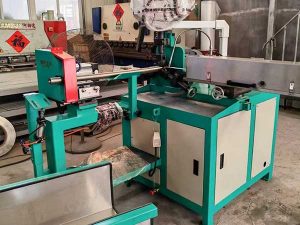
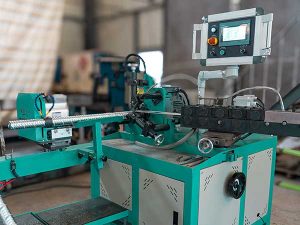
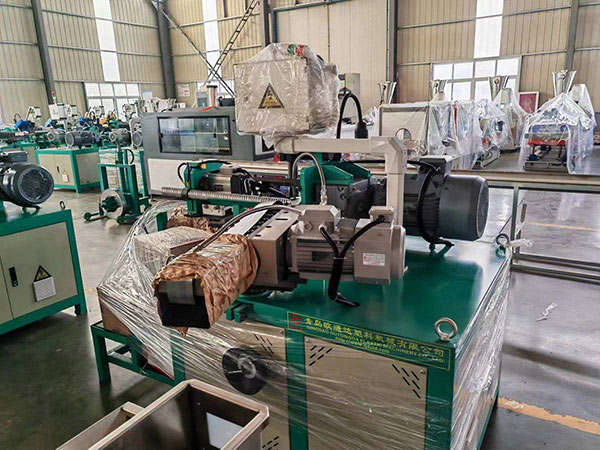
The production line completes continuous melting plasticization, spiral mold forming, gradient cooling and synchronous traction cutting, and can produce two specifications of circular and flat pipes at the same time. The finished prestressed plastic corrugated pipe has a smooth inner wall and ultra-low friction coefficient, which effectively reduces the tension loss of steel strands during construction, and can resist long-term erosion of concrete mortar and underground corrosive soil. The whole line adopts PLC centralized control, and the production speed and pipe diameter can be adjusted freely to adapt to small viaducts and super large cross-sea bridges.
It only takes one hour to replace the mold to switch circular and flat pipe production, meeting the diversified pore layout requirements of beam slabs and anchorages. The front and back end are matched with professional plastic tractors and burr-free cutting machines to ensure uniform pipe wall thickness and neat cutting sections, avoiding scratching steel strands during threading. The equipment supports PE100 and modified PP resin as raw materials, and anti-UV color masterbatch feeding can be added for exposed pipeline sections, becoming a reliable HDPE prestress duct manufacturing device.
Compared with metal pipe rolling equipment, plastic spiral extrusion lines avoid the cost fluctuation risk of steel raw materials, reducing the comprehensive production cost of pipe manufacturers by 22%. All finished pipes have passed international bending, ring stiffness and sealing tests, fully complying with AASHTO bridge construction standards. Driven by the expansion of cross-sea transportation infrastructure, the order volume of plastic prestress pipe production equipment will maintain double-digit annual growth by 2030, and the market potential of coastal Asia-Pacific and Mediterranean regions is particularly prominent.